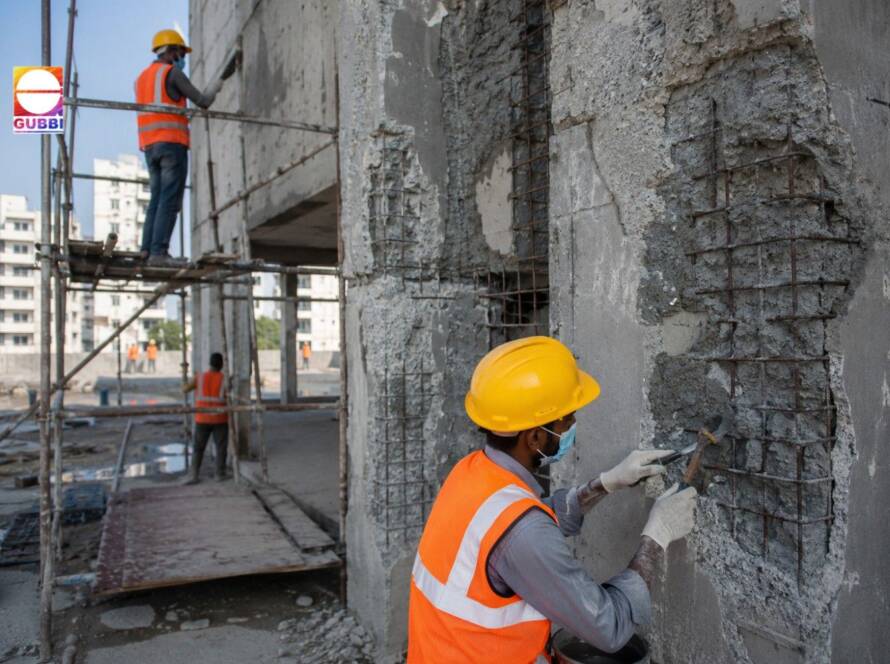


Building Repairs should never begin only after visible deterioration becomes severe. By the time cracks widen, reinforcement starts corroding, waterproofing fails, or concrete begins delaminating, the repair scope often becomes significantly larger and more expensive. A proactive inspection and maintenance strategy helps identify structural deficiencies at an early stage, allowing targeted intervention before they compromise safety, serviceability, and long-term asset value.
Whether you manage commercial complexes, industrial facilities, hospitals, educational institutions, or infrastructure assets, a systematic Building Repairs checklist enables informed maintenance planning, reduces emergency repair costs, minimizes operational disruptions, and extends the service life of reinforced concrete structures.
This checklist outlines the key engineering parameters that property owners and facility managers should evaluate before planning any repair or rehabilitation program.
Why a Structured Building Repairs Checklist Matters?
Most structural defects develop gradually due to environmental exposure, moisture ingress, carbonation, chloride contamination, cyclic loading, poor construction practices, ageing materials, or inadequate maintenance. Waiting until visible damage becomes extensive usually increases repair complexity and project cost.
A professionally executed building repairs assessment helps:
- Detect deterioration before structural performance is affected
- Prioritize repairs based on engineering risk
- Prevent progressive concrete deterioration
- Improve occupant safety
- Extend structural service life
- Optimize lifecycle maintenance budgets
- Support long-term asset management planning
Rather than treating symptoms alone, successful repair projects address the root causes responsible for deterioration.
1. Inspect Structural Cracks Carefully
Not every crack indicates structural distress, but every crack deserves engineering evaluation.
During inspections, document:
- Crack width and length
- Crack pattern and orientation
- Active or dormant movement
- Moisture seepage through cracks
- Location in beams, slabs, columns, walls, balconies, staircases, or foundations
Structural cracks may indicate excessive loading, reinforcement corrosion, settlement, thermal movement, creep, shrinkage, or design deficiencies. Proper crack mapping helps determine whether epoxy injection, routing and sealing, structural strengthening, or component replacement is required during building repairs.
2. Check for Reinforcement Corrosion
Corrosion remains one of the leading causes of concrete deterioration.
Inspect for:
- Rust stains on concrete surfaces
- Concrete spalling
- Delaminated concrete
- Exposed reinforcement
- Hollow sounding concrete
- Expansion cracks along reinforcement
Once corrosion initiates, steel expansion generates internal stresses that progressively damage surrounding concrete. Effective Building Repairs require identifying corrosion mechanisms before selecting repair materials.
3. Assess Concrete Condition
Concrete strength and durability reduce over time due to environmental exposure.
Evaluate:
- Surface scaling
- Honeycombing
- Delamination
- Surface erosion
- Concrete disintegration
- Low cover depth
- Voids and cavities
Non-Destructive Testing (NDT) combined with visual inspection provides reliable information regarding existing concrete quality and repair requirements.
4. Identify Water Leakage and Moisture Ingress
Water is one of the most destructive agents affecting reinforced concrete structures.
Inspect areas including:
- Roof slabs
- Basements
- Expansion joints
- Wet areas
- Water tanks
- External walls
- Podium slabs
- Balconies
Persistent moisture accelerates corrosion, reduces concrete durability, damages finishes, and weakens repair performance. Eliminating the source of water ingress should always precede building repairs.
5. Evaluate Waterproofing Performance
Failed waterproofing systems often initiate structural deterioration.
Check for:
- Ponding water
- Damp patches
- Efflorescence
- Peeling paint
- Ceiling leakage
- Membrane damage
- Joint failures
Building Waterproofing deficiencies should be addressed as part of an integrated repair strategy rather than treated as isolated maintenance issues.
6. Verify Carbonation and Chloride Exposure
Ageing RCC buildings located in coastal, industrial, or urban environments require durability assessment.
Engineering investigations may include:
- Carbonation depth testing
- Chloride content analysis
- Half-cell potential testing
- Concrete resistivity testing
These investigations determine corrosion risk and assist engineers in selecting durable building repairs solutions that mitigate future deterioration.
7. Review Structural Load Changes
Many buildings undergo functional modifications during their service life.
Assess whether the structure has experienced:
- Additional floors
- Heavy machinery installation
- Increased storage loads
- Interior modifications
- Equipment additions
- Wall removals
- Change in occupancy
Structural review ensures the existing load-carrying capacity remains adequate and identifies whether strengthening measures are required along with building rehabilitation services.
8. Examine Previous Repair Performance
Repeated failures often indicate that earlier repairs addressed symptoms rather than underlying deterioration mechanisms.
Inspect previous repairs for:
- Debonding
- Re-cracking
- Patch failure
- Coating deterioration
- Continued leakage
- Corrosion recurrence
Engineering evaluation should determine why previous repairs failed before implementing new repair systems.
9. Perform Structural Health Assessment
Visual observations alone cannot accurately determine structural condition.
A comprehensive assessment may include:
- Rebound Hammer Test
- Ultrasonic Pulse Velocity (UPV)
- Cover Meter Survey
- Core Testing
- Half-Cell Potential Test
- Carbonation Test
- Chloride Test
- Structural Analysis
- Residual Service Life Assessment
These investigations provide data-driven recommendations for planning effective Building Repairs while avoiding unnecessary demolition or over-repair.
10. Develop a Long-Term Repair and Maintenance Strategy
Successful asset management extends beyond completing a single repair project.
Facility managers should establish:
- Periodic inspection schedules
- Preventive maintenance plans
- Waterproofing maintenance cycles
- Structural monitoring programs
- Corrosion protection measures
- Repair documentation
- Capital maintenance budgeting
Well-planned building repairs and renovation combined with routine inspections significantly reduce lifecycle costs while improving structural reliability.
Common Signs That Building Repairs Should Not Be Delayed
Immediate engineering evaluation is recommended if your building exhibits:
- Wide structural cracks
- Concrete spalling
- Exposed reinforcement
- Severe corrosion
- Water leakage
- Damp walls
- Settlement cracks
- Deflection in slabs or beams
- Falling concrete fragments
- Repeated waterproofing failures
Ignoring these warning signs can accelerate deterioration and increase future rehabilitation costs.
Professional Building Repairs Require Engineering Expertise
Every deteriorated structure has a different deterioration mechanism, exposure condition, and structural requirement. Therefore, successful Building Repairs should always begin with a detailed condition assessment rather than selecting repair materials based solely on visible damage.
Professional structural engineers evaluate the root cause of deterioration, perform appropriate diagnostic investigations, design technically suitable structural repair methodologies, and recommend durable rehabilitation solutions that restore structural integrity while extending the remaining service life of the asset.
For property owners and facility managers, adopting a preventive maintenance approach instead of reactive repairs helps protect investments, reduce operational risks, and ensure buildings continue to perform safely for decades.
A comprehensive structural inspection is generally recommended every 3-5 years, while buildings exposed to coastal environments, industrial pollution, or heavy usage may require more frequent engineering assessments.
Yes. When deterioration is identified early and repairs are designed based on engineering investigations, structural repair can significantly improve durability and extend the building’s remaining service life.
No. Some cracks are non-structural, while others indicate serious structural distress. Professional evaluation is necessary to determine the cause and recommend the appropriate repair methodology.
Professional services may include structural inspection, Non-Destructive Testing (NDT), corrosion assessment, crack evaluation, repair design, waterproofing solutions, structural strengthening, concrete restoration, and long-term maintenance planning.
Conclusion
Building Repairs are far more effective when planned through systematic engineering assessment rather than emergency response. A structured inspection checklist enables early identification of deterioration, supports informed maintenance decisions, and minimizes costly structural failures.
If your property shows signs of ageing, corrosion, cracking, leakage, or concrete distress, a professional structural assessment is the first step toward developing an effective repair strategy.
Investing in timely Building Rehabilitation today can significantly extend your building’s lifespan, improve occupant safety, and preserve its long-term asset value.